
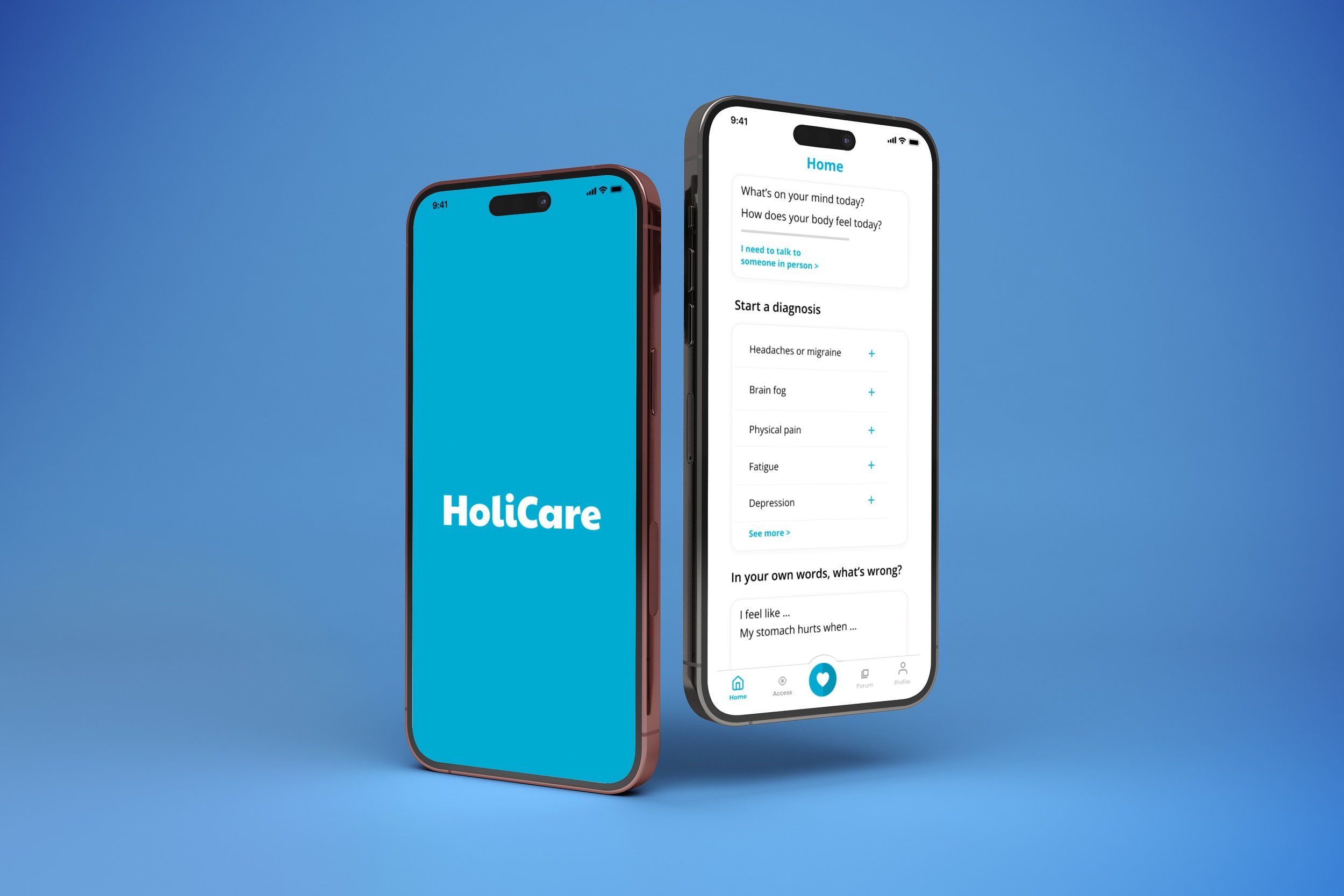
Holistic health diagnosis and recovery.
Democratizing holistic health diagnoses using AI and decentralized blockchain.

Context & Challenge
This project was developed as part of a time-constrained human-centered design and strategy assessment. The challenge focused on millennials’ growing expectations for convenient, credible, and holistic healthcare, and the systemic gaps they experience when navigating fragmented providers, diagnoses, and information.
Process
Within five days, I conducted primary and secondary research, synthesized qualitative user interviews, translated insights into a strategic framing and business model hypothesis, and created wireframes to bring the concept to life.
Outcome
A digital solution addressing the fragmentation and lack of transparency in healthcare diagnostics. Holicare aggregates multiple personal health data sources into an AI-driven diagnosis, empowering patients with clarity and agency to choose informed recovery paths.
Design Research and Human Signals
Through in-depth interviews and affinity mapping, I surfaced recurring signals around how millennial patients experience healthcare today. Core pain points included speed of diagnosis, credibility, trust, and fragmented or incomplete information (“loose ends”).
Representative quotes included: “I never talk to my doctor about my mental health” or “I’m frustrated when doctors only uncover part of the problem”. These signals pointed less to a technology gap and more to a lack of shared meaning, coherence, and continuity across the healthcare ecosystem.
Key Insights
Millennials wish to understand root causes and pursue natural, holistic treatment paths rather than isolated symptom fixes.
Specialized providers uncover only small parts of a larger problem, creating fragmented experiences and unresolved problems.
Millennials are future-oriented and motivated by preventative health and long-term wellbeing.
Millennials are willing to share personal health data within reason of clearer, more accurate, and trustworthy diagnoses.
Strategic Framing & HMW Question
How might we design a holistic healthcare experience for millennials that delivers credible diagnoses, integrates mental and physical health, protects data privacy, enables collaboration among providers, and empowers patients with preventative, personalized care?
Jobs-to-be-done
The JTBD for millennials (derived from the question: “What does health mean to you?”) is to achieve homeostasis and holistic functioning: caring for both their current and future health while feeling physically and mentally well.
Concept and Business model
Holicare is a digital healthcare concept designed to address fragmentation in diagnosis. The platform synthesizes multiple personal health data sources into an AI-driven diagnostic view, giving patients clarity while preserving agency over treatment and recovery options. Holicare is a dual-sided business model that connects health practitioners, family health history, and patients. Its core value proposition is to democratize and simplify healthcare through mass personalization, while honoring the expertise of specialized practitioners and consolidating fragmented knowledge into a clear, actionable diagnosis for the user.
Opportunity & Impact
For a hypothetical client, Holicare represents an opportunity to unlock scalable growth and network effects, supported by emerging technologies such as AI and blockchain. By increasing diagnostic clarity and efficiency, the platform drives higher patient satisfaction, long-term trust, loyalty, and advocacy.
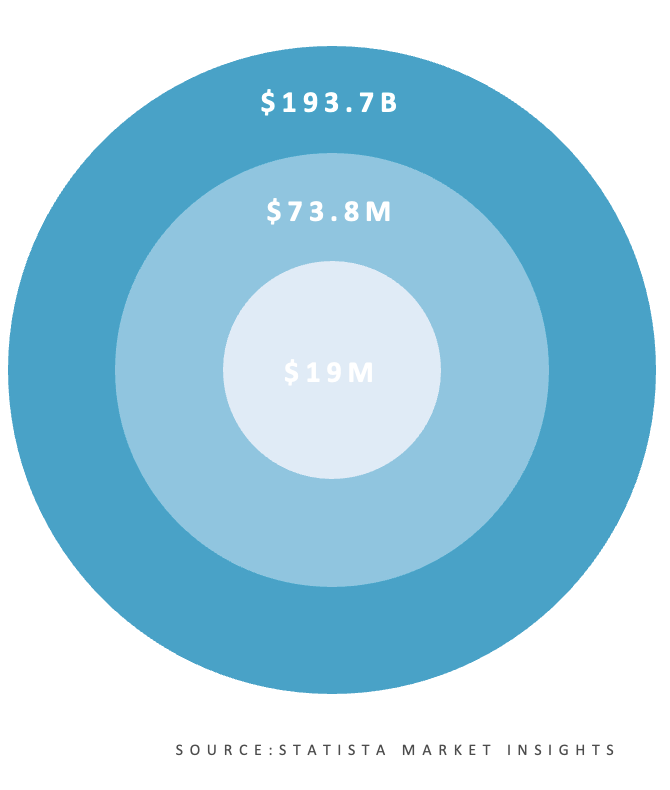
$193.7B: Global digital health
Referring to the use of technology to improve healthcare delivery, the market is projected to surge by 13.8% in 2024. This includes digital fitness, well-being, online consultation, and digital treatment and care.
$73.8m: Global digital treatment and care
The global digital treatment and care market refers to the improvement of overall health using monitoring and lifestyle-related applications, projected to surge by 16.7% in 2024.
$19m: US digital care management
The US digital care management market refers to applications with analyses, information, and monitoring capabilities to improve overall health, projected to surge by 14.6% in 2024.

Strengths
Network of professionals, secure blockchain technology, health database, AI algorithm, community, chatbot, recovery plans.
Weakness
Potential false diagnoses, misleading data, inconclusive information, biased test results, availability bias in doctors.
Opportunities
Breadth of new industries, emerging technologies, preventative healthcare with predictive analytics, involving payment insurance and public actors.
Threats
Unknown health conditions, operations after serious diagnoses, increased competition, aging demographic, increased mental illnesses.